Daily Note: A Versatile Handwritten Font for Creative Projects
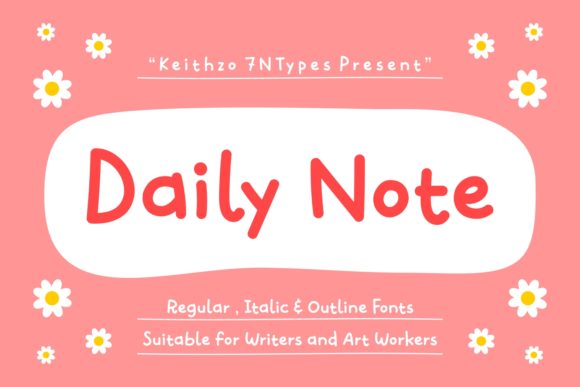
Daily Note is a cool and friendly handwritten font that brings a personal touch to any design project. Designed with simplicity and readability in mind, it offers a unique visual style that can complement a wide range of creative applications. Whether you're working on branding materials, social media content, or digital presentations, Daily Note has the potential to elevate your designs and make them stand out.
What Is Daily Note?
Daily Note is a handwriting-style typeface that captures the essence of natural writing. Its characters are crafted to resemble the fluidity and irregularity of hand-drawn letters, giving it a warm and approachable feel. The font is available in multiple weights and styles, making it adaptable to various design needs. It’s ideal for those who want to add a human element to their work without sacrificing clarity or professionalism.
Why Might Someone Be Interested in Daily Note?
There are several reasons why designers and creators might find Daily Note appealing. First, its casual and friendly appearance makes it perfect for projects that require a more personal or informal tone. This could include things like greeting cards, invitations, or social media graphics. Second, the font’s versatility allows it to be used across different mediums, from print to digital formats. Finally, its distinct character helps text stand out in a crowded visual landscape, making it a great choice for branding and marketing materials.
Benefits of Using Daily Note
One of the key advantages of Daily Note is its ability to create a strong visual identity. Because it's a handwritten font, it adds a sense of authenticity and individuality to any project. This can be especially valuable in creative fields where originality is important. Additionally, Daily Note is easy to read at a glance, which makes it suitable for both short and long-form content. Its clean lines and balanced spacing also contribute to an aesthetically pleasing design.
Another benefit is its adaptability. Daily Note can be paired with a variety of other fonts to create cohesive design systems. For example, it can be used alongside sans-serif fonts for contrast, or with serif fonts to add a touch of elegance. This flexibility means that it can fit into a wide range of design contexts, from modern minimalism to vintage-inspired aesthetics.
Considerations and Tradeoffs
While Daily Note offers many benefits, there are some considerations to keep in mind. One potential drawback is that its handwritten nature may not be suitable for all types of content. For instance, it might not be the best choice for formal documents, legal texts, or technical reports where clarity and professionalism are paramount. In such cases, a more structured and traditional font would be more appropriate.
Additionally, the legibility of Daily Note can vary depending on the size and context in which it is used. At smaller sizes, the font may become difficult to read, especially if the text is meant to be viewed from a distance. Designers should test how the font looks in different environments to ensure it remains effective and accessible.
When Is Daily Note a Strong Fit?
Daily Note shines in situations where a personal and friendly tone is desired. It works particularly well for projects that aim to connect with audiences on an emotional level. This includes branding for lifestyle brands, creative portfolios, and community-based initiatives. It’s also a great option for digital content such as blog headers, social media posts, and email signatures, where a warm and approachable look is beneficial.
Furthermore, Daily Note can be a powerful tool for storytelling. Its organic and flowing style can help convey a narrative that feels authentic and relatable. This makes it a good fit for creative writing, poetry, and other forms of expressive content.
When Might Alternatives Be Worth Considering?
For certain projects, alternatives to Daily Note may be more suitable. If you’re looking for a font that emphasizes clarity and professionalism, consider using a sans-serif typeface like Helvetica or Arial. These fonts are widely recognized for their readability and neutrality, making them ideal for business communications, reports, and presentations.
If you need a font that conveys a more traditional or elegant feel, serif fonts like Times New Roman or Georgia could be better choices. They offer a classic and refined appearance that is often associated with formal settings. Additionally, if your design requires high legibility at small sizes, opt for a font specifically designed for readability, such as Verdana or Calibri.
Practical Insights for Decision-Making
When deciding whether to use Daily Note, consider your project’s goals and audience. Ask yourself: Does the font align with the message I want to convey? Will it be easily readable in the intended context? How does it fit with the overall design aesthetic?
It’s also important to test the font in different scenarios. Preview your designs on various devices and screen sizes to ensure consistency. Don’t hesitate to experiment with different combinations of fonts to find the best match for your needs.
Ultimately, Daily Note is a versatile and stylish font that can enhance a wide range of creative projects. By understanding its strengths and limitations, you can make informed decisions about when and how to use it effectively.